

Can Ear Infections Cause Temporary or Permanent Hearing Loss?
Our Observations
- Ear infections cause inflammation and fluid in the ear that block sound. Most ear infections result in temporary hearing loss that typically resolves with treatment and time.
- Middle ear issues such as otitis media frequently lead to muffled hearing due to fluid and pressure. Repeated or chronic infections raise the likelihood of permanent harm to the eardrum, ossicles, or inner ear.
- Involvement of the inner ear or the auditory nerve, usually through viral infections, carries the greatest risk of permanent hearing loss and may present with balance problems, necessitating immediate specialist intervention.
- Immediate care is needed for warning signs such as sudden muffled hearing, severe ear pain, persistent ear fullness, dizziness or balance problems, or any ear discharge. Early treatment minimizes long-term risk.
- Diagnosis relies on otoscopic examination, audiometry, and sometimes imaging or specialist tests to differentiate reversible from irreversible causes and to guide direct treatments such as antibiotics, ear drops, steroids, or ear tubes.
- Prevent further hearing loss by monitoring symptoms, seeking timely medical care, completing prescribed treatments, scheduling follow-up hearing checks, and addressing recurrent infection causes with a clinician.
Ear infections can cause hearing loss when fluid, inflammation, or damage affects the middle or inner ear. Acute otitis media generally impairs sound perception by 20 to 40 decibels.
Chronic infections increase the likelihood of permanent damage to the ossicles or cochlea.
Early diagnosis with otoscopy and audiometry minimizes damage. The body discusses symptoms, diagnosis, and treatment procedures.

Last update on 2026-08-21 / Affiliate links / Images from Amazon Product Advertising API
How Ear Infections Cause Hearing Loss
Ear infections, particularly middle and inner ear infections, disrupt the ear’s normal function. Depending on their location and intensity, these infections can reduce hearing by blocking sound and irritating nerves, potentially leading to permanent hearing loss.
1. Fluid Blockage
Fluid in the middle ear, which sits behind the eardrum, diminishes the ear’s capacity to transmit sound waves. When air is swapped out for liquid, the eardrum can’t freely vibrate, and much of the incoming sound is muffled.
Eustachian tube dysfunction, acute otitis media, chronic otitis media with effusion, and allergic reactions are common aetiologies.
Upper respiratory infections, sinusitis, and adenoid enlargement in children drive fluid into the middle ear.
Fluid-related hearing loss is typically conductive and temporary. Once the fluid drains or is cleared with treatment, hearing often improves. Children are particularly vulnerable because their Eustachian tubes are short and horizontal, so fluid collects more readily and tends to stick around.
This is why preschoolers experience so many temporary dips in hearing.
2. Eardrum Pressure
Infection produces pus and gas, increasing pressure in the middle ear. This pressure stretches the tympanic membrane, making it less able to move in response to sound, and in extreme cases, the membrane can perforate.
Eardrum motion is essential. It couples airborne sound to the ossicles. If the drum is tight or perforated, the coupling is gone and sound energy plummets.
Patients report immediate loss of hearing and severe pain when perforation takes place.
Most small holes shut, and hearing comes back as the eardrum recovers. When healing causes scar tissue, known as tympanosclerosis, some high-frequency hearing loss can persist.
3. Ossicle Damage
To the ossicles—malleus, incus, and stapes—bones so small that an audiologist can count them during a routine examination. Repeated or chronic infection can erode the ossicles, loosen their joints, or cause fixation from scar and bone growth.
When ossicles are affected, conductive hearing loss may become permanent and refractory to medical treatment.
Conductive loss due to ossicular issues commonly necessitates surgical interventions, such as ossiculoplasty or prosthetic replacement, to restore sound conduction and improve hearing.
4. Nerve Inflammation
Inner ear or labyrinthine infections can inflame the cochlea or the auditory nerve. When the nerve fibers swell or are damaged by a virus, the signal transmission to the brain diminishes.
Nerve involvement increases the risk of permanent sensorineural hearing loss. Viral agents, such as herpes or measles, more commonly affect neural tissue than typical bacteria.
Nerve inflammation can strike balance structures, causing dizziness along with hearing loss.
Infection Types and Hearing Impact
Ear infections occur in three anatomical zones: the outer ear (external auditory canal), the middle ear (tympanic cavity behind the eardrum), and the inner ear (cochlea and vestibular apparatus). Each site produces distinct symptoms, risks, and mechanisms that affect hearing.
The table below summarizes common infection types, typical symptoms, and relative risk to hearing.
| Infection site | Common types | Symptoms | Hearing risk |
|---|---|---|---|
| Outer ear | Otitis externa (swimmer’s ear) | Ear pain, itching, canal redness, discharge, reduced sound clarity | Usually temporary muffling; low risk of permanent loss unless severe or spreading |
| Middle ear | Acute otitis media, otitis media with effusion, chronic suppurative otitis media | Ear pain, fever, fluid behind eardrum, hearing reduction, sometimes pus | Often temporary conductive loss; chronic or recurrent cases can lead to permanent conductive or mixed loss |
| Inner ear | Labyrinthitis, viral cochleitis | Vertigo, balance problems, hearing loss, tinnitus | High risk of permanent sensorineural loss; can affect balance and speech clarity |
Middle Ear
Otitis media is the most common infection-induced hearing loss worldwide. Fluid and pus accumulate in the middle ear space when the Eustachian tube does not ventilate the cavity, providing a barrier to vibration of the tympanic membrane and ossicles.
Sound conduction is impaired because the mechanical lever system that converts air pressure to cochlear fluid motion cannot move as easily. The majority cause a mild-to-moderate conductive loss that resolves once the fluid clears or with treatment.
Repeated infections or untreated chronic suppurative otitis media can erode the ossicles or perforate the tympanic membrane, resulting in persistent conductive loss or mixed loss if inner ear structures are involved.
Outer Ear
Swimmer’s ear is a bacterial or fungal infection of the external auditory canal following water exposure or skin breakdown.
Swelling of the canal walls and debris or pus build-up constrict the passage for sound waves, creating a muffled quality rather than true sensorineural loss.
Hearing typically recovers after inflammation and debris clear with topical antibiotics, antiseptics, or debridement. In severe cases, infection can track deeper, involving the temporal bone (malignant otitis externa), or penetrate the middle ear spaces, posing a greater risk to long-term hearing.
Inner Ear
Inner ear infections are less common but have the most severe hearing implications. Infection or inflammation of the cochlea and vestibular organs can harm hair cells and neural pathways that transduce and transmit sound signals.
That damage frequently leads to sensorineural hearing loss and balance dysfunction, which is often permanent or only partially reversible. On the infectious side, viral agents like herpes simplex, varicella-zoster, and cytomegalovirus are the usual suspects.
Bacterial extension from adjacent structures is less common but can occur, particularly following aggressive middle ear disease.
Specialist care in a timely manner can sometimes minimize damage but does not always restore lost function.

- FAST ACTION: BigWave Drops introduce a modern bio-activated formula, incorporating advanced science to enhance your ear care routine.
- EAR DROPS FOR: Surfers, swimmers, extreme water athletes, people who get water in their ears, people who use hearing aids and ear pods, and anyone who experiences discomfort from itching, irritation, or clogged ears.
- APPLY: Tilt your head to the side and slowly apply 1-3 drops to your ear. Let sit for 5-10 seconds. Place a clean cloth outside your ear and return your head to upright. Gently wipe away excess drops and repeat on the other side. Use up to 2x’s daily.
- VALUE PACKED: BigWave Drops Advanced Ear Drops are presented in a generous 2 oz glass bottle, providing more than double the volume offered by other ear drop alternatives. Our packaging is fully recyclable.
- TRUSTED BRAND: BigWave Drops is the number one choice among professional surfers, swimmers, and water athletes. Our ear drops are designed and manufactured right here in Ventura, California. Happily tried in big waves around the world.
Last update on 2026-08-20 / Affiliate links / Images from Amazon Product Advertising API
Temporary Versus Permanent Loss

Ear infections, including middle ear infections and inner ear infections, can lead to temporary or permanent hearing loss.
Some infections only block sound or irritate tissues and heal with treatment, while others damage structures inside the ear, resulting in lasting loss.
Here are the key distinctions, common examples, and why prompt treatment is important.
Reversible Effects
- Fluid in the middle ear (effusion) that muffles sound.
- Temporary conductive loss from eardrum bulging or perforation that eventually closes.
- Eustachian tube dysfunction from allergy or cold that traps air and fluid.
- Mild middle ear lining swelling that diminishes sound conduction.
- Impacted cerumen post-infection that plugs up the ear canal.
- Medication-related hearing change that stops when treatment ends.
Most childhood middle ear infections are in this category and are conductive, not sensorineural. Hearing typically goes back to its original level after the fluid drains or the eardrum heals.
Take, for instance, a toddler with acute otitis media, whose hearing might be muffled for a couple of days. After antibiotics or watchful waiting, hearing typically rebounds within a week or two. Adults with a cold who develop a middle ear effusion experience slow improvement over several days as the Eustachian tube reopens.
Watch for improvement in days or weeks. If hearing doesn’t improve within two to four weeks, or if symptoms return, get re-evaluated. Audiometry can establish baseline function and monitor recovery.
Simple interventions, such as warm compresses, appropriate antibiotics, or a short course of nasal steroids for Eustachian dysfunction, help expedite recovery and prevent complications.
Irreversible Damage
Ossicle erosion from chronic middle ear infection can fracture the tiny bones that conduct sound and result in permanent conductive loss. Severe scarring (tympanosclerosis) of the eardrum or middle ear mucosa can stiffen the system and reduce hearing capacity over time.
Direct trauma to the cochlea or auditory nerve from severe or prolonged infection, while less frequent, results in permanent sensorineural damage. Frequent or untreated infections increase the risk.
Chronic suppurative otitis media with continuous discharge often indicates a long-standing inflammatory process that erodes tissue. Examples include long-term cholesteatoma that erodes bone and ossicles. Uncontrolled chronic infection in low-resource settings can leave lasting deficits.
Permanent loss may require hearing aids, bone-anchored devices, or reconstructive surgery such as ossiculoplasty or tympanoplasty.
Early intervention, including quick antibiotics, drainage, or debridement, makes it less likely that temporary losses become permanent.
Recognizing Warning Signs
Ear infections can impact hearing in subtle or sudden ways. Early recognition of these signs directs timely care and minimizes the risk of long-term damage.
Use the checklist below and the symptom descriptions that follow to monitor changes in hearing, pain, balance, and discharge.
Early detection is the key to a positive prognosis.
Parent and adult checklist
- Total or partial hearing loss, whether sudden or gradual, includes muffled voices or hard-to-follow conversations.
- Ear pain score ranges from zero to ten, and whether pain awakens from sleep.
- Feeling of fullness or congestion in one or both ears.
- Dizziness, lightheadedness, or true spinning (vertigo).
- Any ear discharge includes its color (clear, cloudy, yellow, or bloody), the amount, and when it started.
- Fever, irritability (in children), or new sensitivity to sound.
- Changes following water exposure, recent upper respiratory infection, or trauma.
Muffled Sounds
Voices and background sounds can fade. Words sound muffled, or some frequencies drop, so speech sounds flat.
Muffled hearing usually indicates fluid in the middle ear or mucosal swelling that interferes with sound conduction.
If muffling follows soon after a viral upper respiratory infection, fluid accumulation is probable. Sudden, severe muffling accompanied by sharp pain or a pop could indicate an eardrum rupture, which requires immediate attention to prevent infection from spreading.
Test hearing in quiet rooms and noisy places, like a bustling café or street, to observe the variations and the ear involved.
Ear Fullness
A sense of pressure or congestion is typical. Your ear might feel ‘plugged’ during an altitude change or experience persistent pressure that won’t subside.
Fullness is generally related to trapped fluid or inflamed Eustachian tube function. Fullness that persists for more than a couple of days points to chronic middle-ear issues instead of transient barotrauma.
Rapidly compare sensations in both ears and observe whether swallowing, yawning, or the use of decongestants alters the sensation.
Balance Problems
Dizziness, unsteadiness, or true vertigo are warning signs. These can range from mild disequilibrium to intense vertigo lasting minutes to hours.
Inner ear balance mechanisms become inflamed or involved in infection. Balance issues require immediate care, as they can signify labyrinthitis or a more serious underlying condition.
No driving, no ladders, and no heavy machinery until a clinician signs off on your stability.
Discharge or Pain
Any pus, blood, or clear fluid leaking from the ear is worrisome and should be evaluated clinically. Severe or worsening pain, particularly with fever, indicates complications such as acute suppurative otitis media.
Ear discharge accompanied by hearing loss suggests a higher risk of perforation. Document when the leak began, its color and amount, and how the pain evolved.
These notes assist clinicians in making decisions about testing or treatment.

- FAST-ACTING EAR PAIN RELIEF: eosera Ear Pain MD is a specially formulated ear drop solution designed to help provide fast, temporary relief from earaches caused by colds, allergies, and irritation; Helps deliver numbing comfort on contact
- MAXIMUM STRENGTH NUMBING FORMULA: Formulated with 4% lidocaine to help temporarily relieve ear pain; Helps desensitize aggravated nerves and support a more comfortable ear care experience
- IDEAL FOR COMMON EAR DISCOMFORT: Helps provide temporary relief from ear pain associated with ear infections, pressure, and everyday irritation; Designed to support a simple at-home ear care routine
- SAFE, NON-IRRITATING ALTERNATIVE: Helps relieve ear discomfort without using objects that may irritate the ear; Supports a gentle ear care routine
- EASY-TO-USE APPLICATION: Dropper bottle delivers controlled ear drops that help coat the ear canal; Designed for quick, convenient application as part of your ear care routine; Suitable for adults and children 2 years and older
Last update on 2026-08-21 / Affiliate links / Images from Amazon Product Advertising API
The Silent Toll of Recurrent Infections
Recurring ear infections do more than cause temporary pain and hearing inconvenience; they can lead to a pattern of middle ear damage that gradually diminishes hearing acuity.
Every episode introduces fluid, pressure, and inflammation into the middle ear space, which can contribute to chronic ear infections over time.
Recurrent episodes can alter the lining of the middle ear, disrupt the vibrations of the eardrum and surrounding ossicles (the tiny bones that convey sound), and cause permanent changes in how sound reaches the inner ear.
This disruption often leads to symptoms associated with hearing loss and can significantly affect a person’s auditory system.
Recurrent infections can silently chisel away at hearing through a number of interconnected processes. With persistent middle ear fluid, sound conduction is muffled, so they experience a continuous low-level hearing loss during and between episodes.
Over time, continuous fluid and infection can harden or perforate the eardrum. A hardened eardrum doesn’t vibrate much, while a hole impedes sound vibration.
Chronic ear infections can affect the ossicles—the malleus, incus, and stapes—which may become fused or eroded, resulting in conductive hearing loss.
When those bones can’t move freely due to chronic inflammation, conductive hearing loss becomes chronic.
Sometimes infection spreads, or toxic inflammation injures inner ear hair cells, leading to potential permanent sensorineural loss that may require hearing aids for management.
It’s the silent toll of recurrent infections that causes chronic inflammation, leading to scarring and structural damage. Each immune response deposits fibrous tissue on the eardrum and lining of the middle ear.
Scar tissue stiffens the eardrum and can tug on ossicles, affecting their alignment. Cholesteatoma, an aberrant skin growth caused by chronic Eustachian tube dysfunction and infection, can erode bone and soft tissue in the middle ear and mastoid, increasing the risk of profound hearing loss.
Scarring and bone loss pose a mechanical barrier to sound and increase the risk of chronic, difficult-to-treat hearing loss. High-risk groups include people who have a history of recurrent middle ear infections or other underlying health issues.
- Repeated middle ear infections in infancy (three or more episodes within six months, or four in one year)
- OM effusion lasting longer than three months
- Eustachian tube dysfunction from allergies, cleft palate, or enlarged adenoids.
- Recurrent sinus infections or chronic nasal obstruction
- Immunodeficiency or conditions that impair healing (e.g., diabetes)
Treating these underlying causes is critical to prevent recurrence and minimize long-term damage. Treat allergies, remove large adenoids when indicated, and treat chronic nasal obstruction to restore Eustachian tube function.
Treat proven bacterial infection with appropriate antibiotics and offer tympanostomy tubes for persistent effusion or recurrent episodes to aerate the middle ear. Frequent hearing screening and early referral to an ENT specialist detect structural damage before it becomes permanent.
Diagnosis and Modern Treatment
To make a diagnosis and guide modern treatment for conditions like middle ear infections, doctors begin with a focused history and exam to connect ear pain, discharge, or sudden hearing change to infection.
This rapid context frames what tests are required and what treatment will be most effective.
Physical Examination
Visual inspection employs an otoscope to inspect the ear canal and tympanic membrane. Clinicians observe redness, bulging, perforation, or fluid behind the eardrum. The pattern distinguishes acute otitis media from otitis externa or chronic disease.
Pneumatic otoscopy and gentle palpation examine the mobility of the eardrum. Decreased mobility indicates middle-ear fluid.
Providers might press around the mastoid and tragus to identify tenderness, which can indicate local spread or more severe inflammation.
Results inform next steps.
Obvious fluid with fever will generally lead to immediate treatment. If the view is restricted, clinicians employ suctioning or refer to ENT for further visualization.
Hearing Evaluation
Basic audiometry tests hearing thresholds across frequencies to quantify hearing loss. It is diagnosed by pure-tone testing, which shows the degree and configuration. Speech audiometry tests comprehension in silence and noise.
Tuning fork tests (Rinne and Weber) provide a rapid distinction between conductive and sensorineural loss. A conductive pattern indicates middle-ear fluid or perforation. Sensorineural loss is worrisome for inner-ear involvement.
Objective tests such as tympanometry and otoacoustic emissions are also utilized. Tympanometry measures middle-ear pressure and tympanic membrane compliance, which is helpful in detecting the presence of fluid without requiring patient cooperation.
Otoacoustic emissions test hair-cell function and can detect early inner-ear damage.
Measures establish a baseline and allow clinicians to monitor recovery or identify permanent differences.
Repeat testing is common: once at presentation, after treatment, and at intervals if hearing problems persist.
Medical Interventions
One of the first-line treatments for bacterial middle-ear infection is oral antibiotics, guided by age, severity, and local resistance patterns. Topical antibiotic-steroid ear drops are useful for external ear infections and some perforation-related discharges.
Analgesics, such as acetaminophen or nonsteroidal anti-inflammatory drugs, manage pain and help patients rest. For severe pain, short-term opioids are rarely used in adults and are considered when other measures fail.
Surgical options, such as myringotomy with or without tympanostomy tube placement for recurrent or persistent middle-ear effusion, restore ventilation and reduce the risk of chronic hearing loss.
Mastoidectomy is reserved for complications such as abscess or osteomyelitis.
Systemic or intratympanic steroids can be employed when inflammation threatens inner-ear structures or when sudden sensorineural loss is suspected. Steroids reduce swelling and can make a difference if administered quickly.
Follow-ups confirm resolution, repeat hearing tests, and determine whether any additional intervention is necessary.
About 90% recover fully with modern treatment, and almost all return to baseline hearing when treated in early cases.
| Step | Diagnostic Tool | Typical Treatment |
|---|---|---|
| Initial exam | Otoscopy, history | Analgesics, watchful waiting, or antibiotics |
| Confirm function | Audiometry, tuning forks | Topical drops, oral antibiotics |
| Objective middle-ear assessment | Tympanometry, OAE | Myringotomy/tubes if chronic |
| Severe/inner ear risk | MRI, ENT consult | Steroids, surgery if needed |
Our Conclusion
Ear infections can impair hearing. All of them prevent sound from passing by either filling the ear with liquid or swelling the tissue.
Short-term loss resolves with therapy or time. Recurring or severe infections can damage the inner ear and cause permanent hearing loss.
Identifying pain, sudden muffled hearing, or balance problems and responding quickly keeps risk low. Simple checks, ear drops, or a course of antibiotics sort most cases.
If you have a really stubborn or recurring problem, visit an ear specialist for some imaging or a hearing test.
Cut your risk by staying up to date with vaccinations and maintaining good hygiene habits. Schedule a hearing exam if loss persists for more than a couple of days or recurs.
Early care saves hearing and keeps life dancing to a good sound.
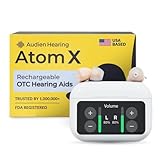
- WORLD’S FIRST TOUCHSCREEN HEARING AID – NO APP, NO TINY BUTTONS, NO FRUSTRATION: Designed for seniors and adults who don’t want to wrestle with a smartphone app or fumble with buttons too small to feel. The Atom X features CaseControl — a built-in touchscreen on the charging case that shows your volume, mode, and battery status at a glance. Just tap. That’s it. Perfect for anyone dealing with arthritis, limited dexterity, or age-related vision changes.
- 4 LISTENING MODES FOR EVERY SITUATION – TV, RESTAURANTS, CONVERSATIONS & MORE: Stop missing what matters. Atom X includes four pre-programmed listening environments so you’re covered wherever life takes you: Conversation Mode for one-on-one talks, Crowd Mode for noisy restaurants or family gatherings, TV Mode for clearer dialogue without turning up the volume, and Comfort Mode for easing into hearing aid use or quieter moments. Switch between modes in seconds — right from the touchscreen case
- 48+ HOUR BATTERY LIFE WITH PORTABLE CHARGING CASE – STAY CONNECTED ALL DAY: With up to 48+ hours of battery life, Atom X outlasts a full two-day trip without needing a wall outlet. The compact charging case doubles as your control hub — bringing power and settings management into one convenient, pocket-sized device. Rechargeable, reliable, and ready when you are — no disposable batteries, no fumbling mid-day
- BLUETOOTH STREAMING – CALLS, MUSIC & TV DIRECTLY TO YOUR EARS: Stay connected with rechargeable hearing aids and universal Bluetooth — no apps or extra accessories needed. Pair with smartphones, tablets, or TVs to take calls hands-free, enjoy clear music, and follow TV dialogue without straining. Developed with audiologist guidance and input from over 1 million Audien customers, the A2 Max processor delivers natural, clear sound, plus built-in UV cleaning while charging.
- AUDIEN SOUND CHECK – EXPERT-GUIDED SETUP INCLUDED WITH EVERY PURCHASE: Every Atom X purchase comes with Audien Sound Check, a complimentary expert-guided setup session. Our specialists walk you through pairing the touchscreen case, choosing the right listening mode, and personalizing your volume — so you hear clearly from day one. No guesswork, just expert support.
Last update on 2026-08-20 / Affiliate links / Images from Amazon Product Advertising API
Frequently Asked Questions
Can ear infections cause temporary hearing loss?
Yes. Fluid, swelling, or pus in the middle ear during a middle ear infection frequently impacts sound conduction, resulting in temporary hearing loss that typically resolves once the infection and treatment have subsided.
Can ear infections lead to permanent hearing loss?
Sometimes, chronic ear infections can damage the eardrum or middle ear ossicles and result in permanent hearing loss, especially without prompt care.
Which types of ear infections affect hearing most?
Middle ear infections, including acute otitis media and chronic otitis media with effusion, most frequently affect hearing due to fluid and inflammation behind the eardrum.
How can I recognize hearing loss from an ear infection?
Look for muffled sounds, difficulty following conversation, requesting repeats, or ear fullness, which may indicate a middle ear infection. If symptoms continue once the ear infection clears, get checked.
When should I see a specialist for hearing changes?
If your hearing loss persists for more than a couple of days after treatment, worsens, or is accompanied by severe pain, high fever, dizziness, or ear discharge, consult a doctor to rule out complications such as middle ear infections.
How are infection-related hearing problems diagnosed?
Clinicians rely on an otoscopic exam, tympanometry, and audiometry to assess middle ear infections, measure hearing, and inform treatment.
What treatments protect hearing during ear infections?
Timely use of antibiotics for an ear infection, along with ear drops, drainage procedures such as myringotomy or grommet insertion, and follow-up care, can prevent complications and minimize the risk of permanent hearing loss.


